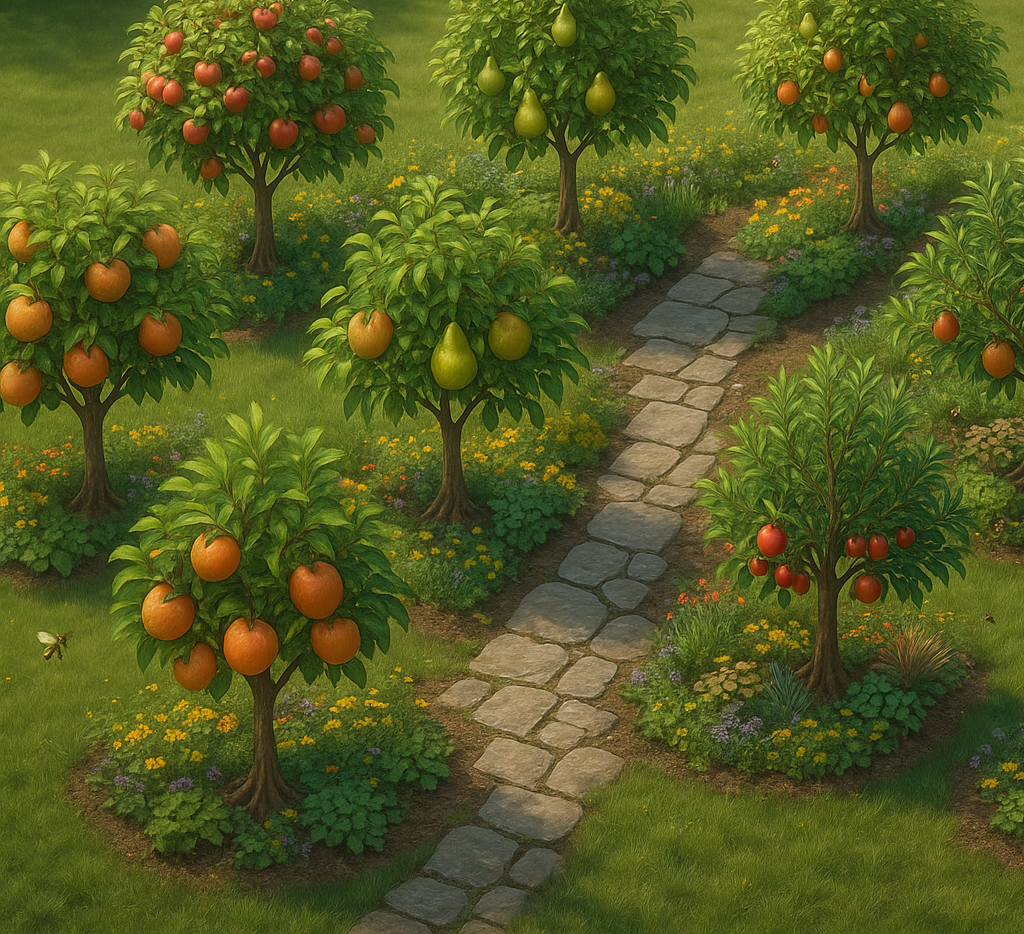
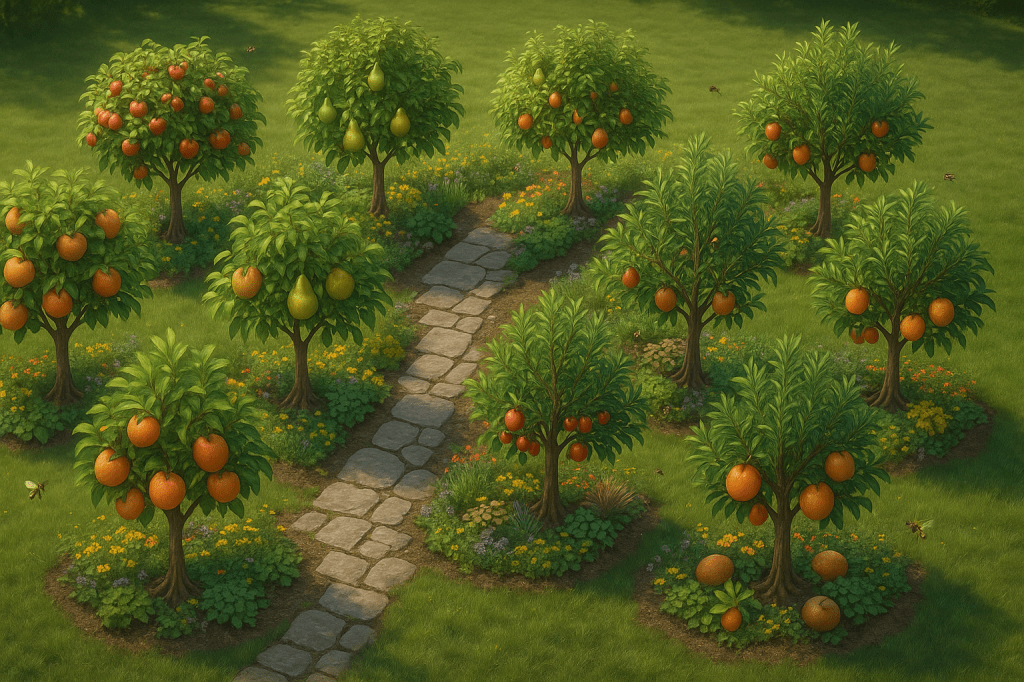
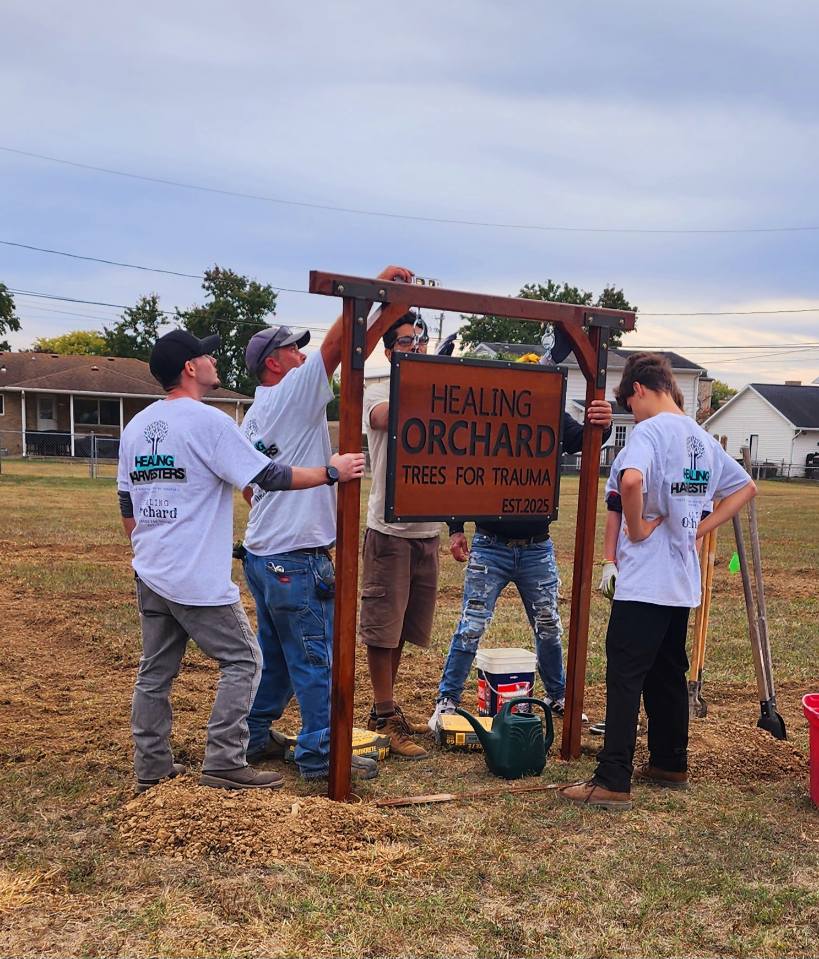
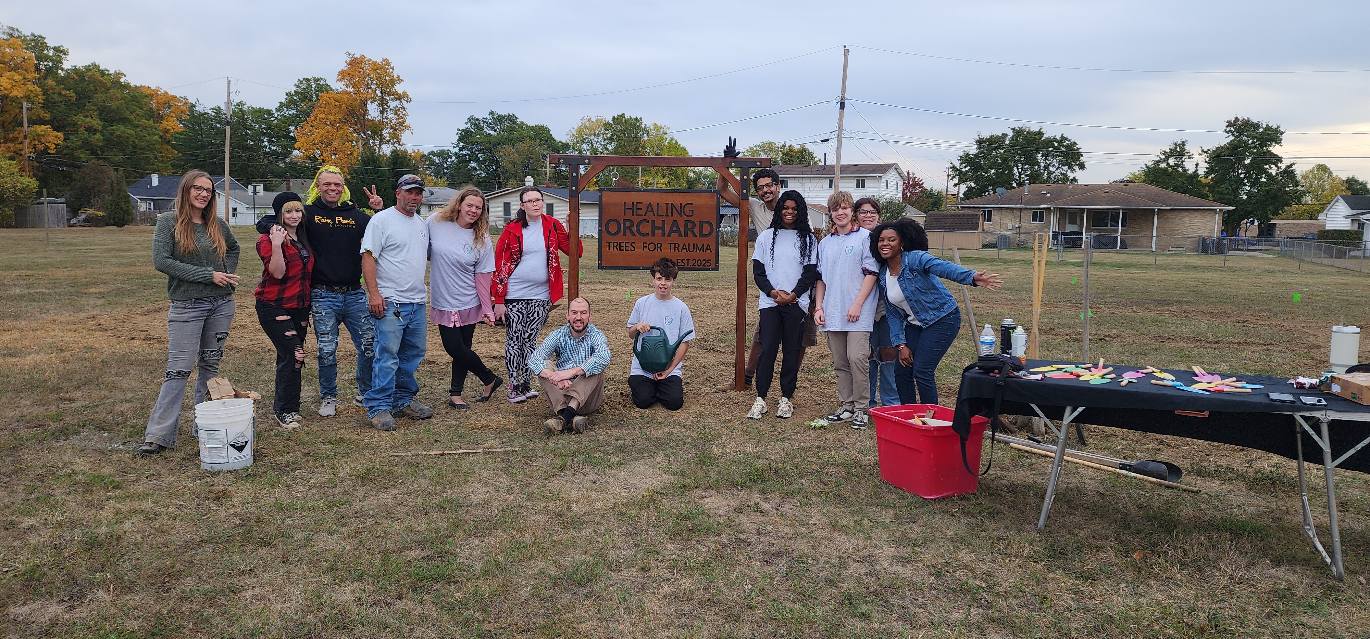
What is a Healing Orchard?
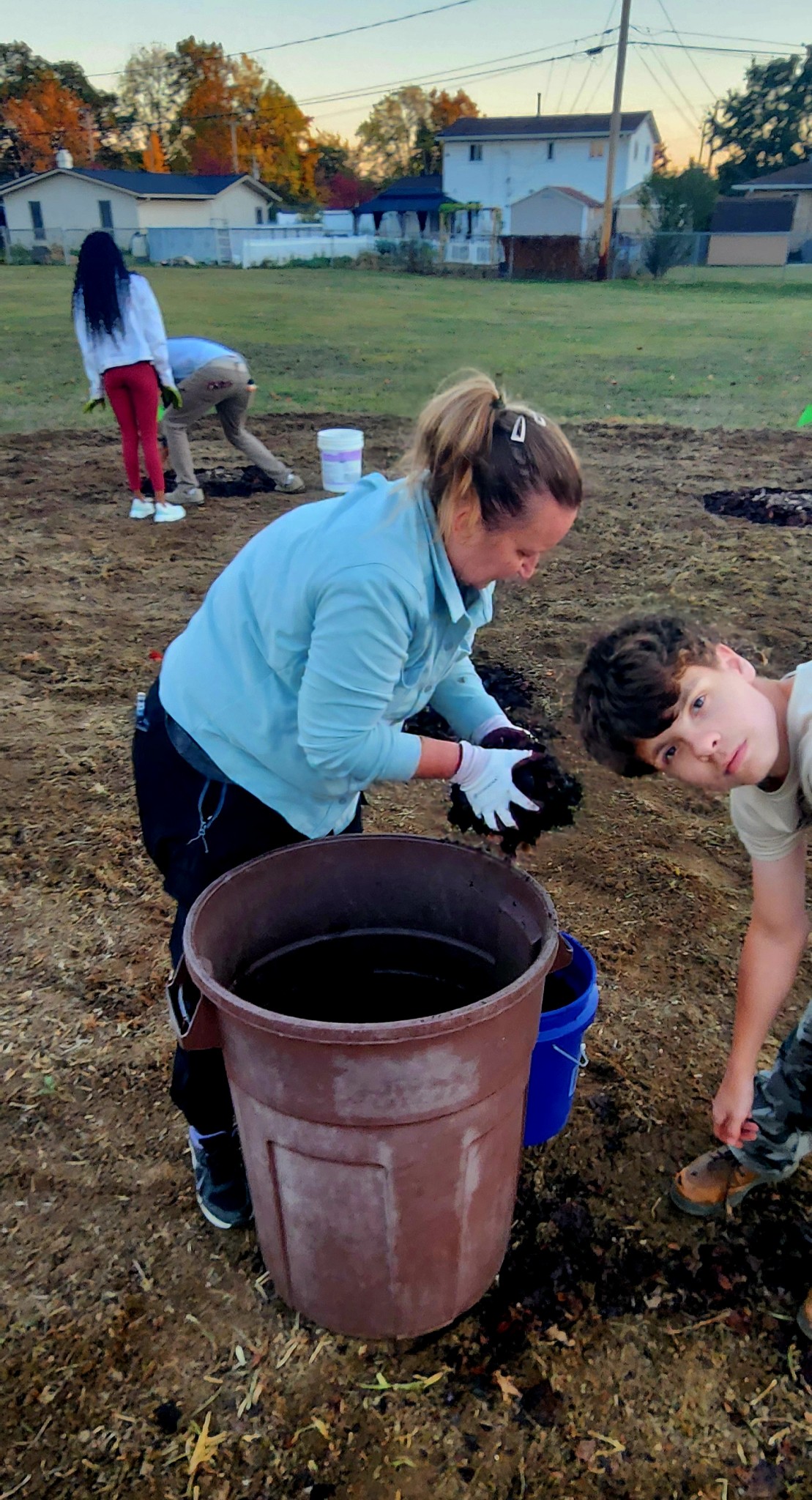
-Regenerating the soil with organic matter
-Trees accompanied by companion plants or guild
-Perennial native plants to attract pollinators
-Learning the connection between soil and gut health
-Using soil health principles and providing information on the connection between trauma healing and maintaining an orchard while turning the land into a thriving food forest!
Why focus on urban soil health?
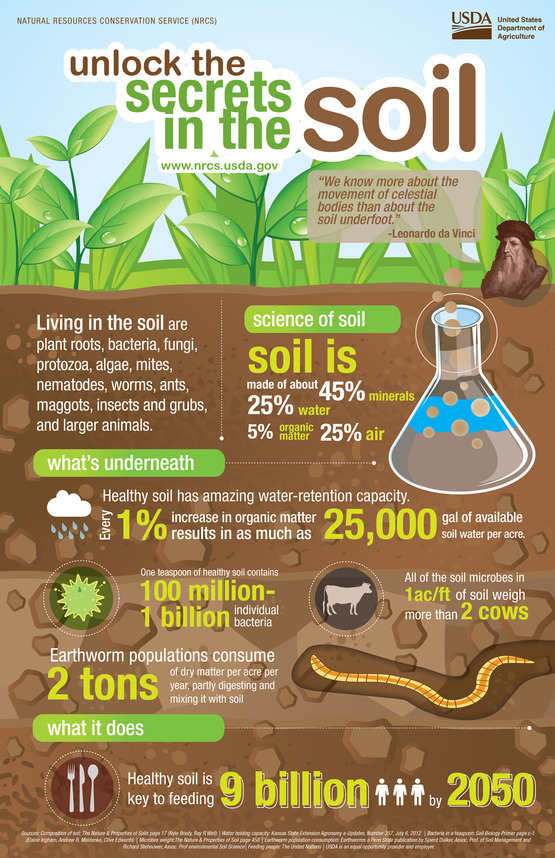
Urban soils need our help!
-Only 7.5% of the Earth’s surface provides the fertile soil we depend on for agriculture.
-Excessive use of synthetic pesticides reduces vital living biodiversity in the soil affecting the entire ecosystem.
-Permeable surfaces and green spaces with healthy soils help to increase water absorption and retention in urban settings.
-Rain gardens and native pollinator plots help filter pollutants and keep them out of our waterways.
Article: Why Soil Matters (and what we can do to save it) | National Geographic
Use the NRCS web soil survey to check the soil information in your area.
Web Soil Survey – Home

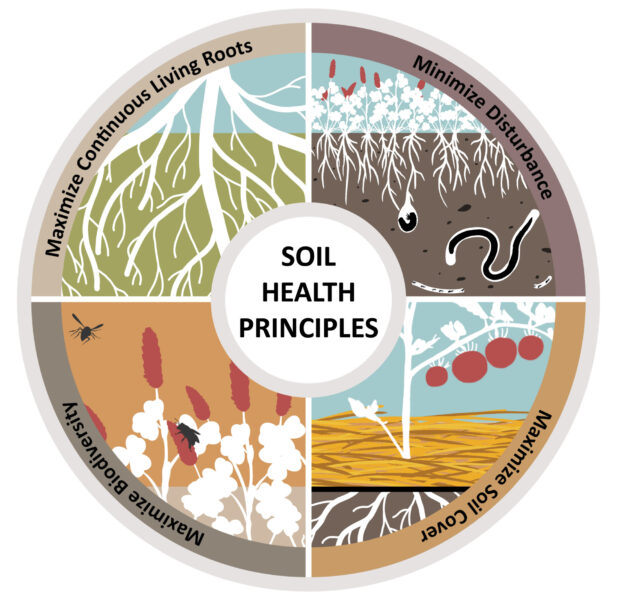
- Minimize disturbance of the soil by eliminating tillage. Try using a broad fork tool for small areas. There are no till drills and other options for larger spaces.
- Maximize soil cover by using mulches, chop and drop to build biomass, grass clippings and leaves. Protect the soil at all times.
- Maximize continuous living roots by using cover crops, trees, bushes and native perennial plants.
- Maximize biodiversity by using a variety of species that will attract a wide range of pollinators, beneficial insects and build a diverse microbiology in the soil.
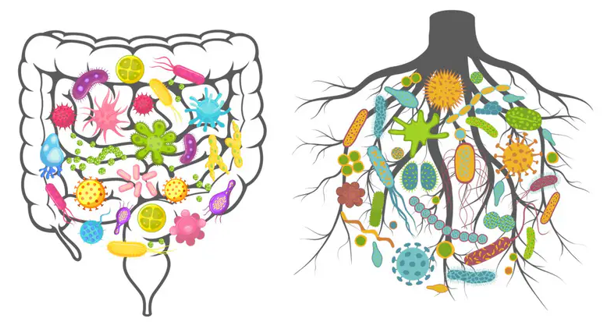
“Microbiomes present in the soil and plant environment, in particular the edible plant parts, have recently been proposed as significant drivers of the taxonomic and functional diversity of the human gut microbiome.”
From: The soil-plant-human gut microbiome axis into perspective – PMC
 Healing Orchards